Black Walnut
First Part

I wrote most of this in 2004, but it didn’t seem finished, partly for lack of good photographs. I revisited the piece today, added a few sentences and made some edits, then inserted the photos to illustrate the various subtopics. This is, in effect, an ode to a beloved tree. (Part 2 will come in a few days.)
Fascination.
That may be the best word I know for how I regard the walnut tree, Juglans nigra, and all its manifestations.
That one fall when I was five or six and our family lived in the big house on Clark Street—the house with the attic that encircled the second floor and that had floor planks held by square nails—we gathered the fallen walnuts, all safely enclosed in their yellowing and browning flesh and husks. We laid them out on newspapers in the shed by the well, my mother and I, to dry in the desiccated air of autumn. I could look down from the large windows on the south side of the sun room onto the shed roof, taking in the old well pump, the swingset, and, just feet away, the thick, furrowed trunk of the tree that produced this crop. By late fall, sometime in November, the husks had frozen, thawed, and dried, and the job fell to me to dress warmly with rubber boots and stomp and roll the nuts until the husks broke away and the dry remnant of the flesh crumbled onto the summer’s comics, news, and editorials. The dark, hard, rough-ridged shells and their treasured nut meats were ready for cracking.
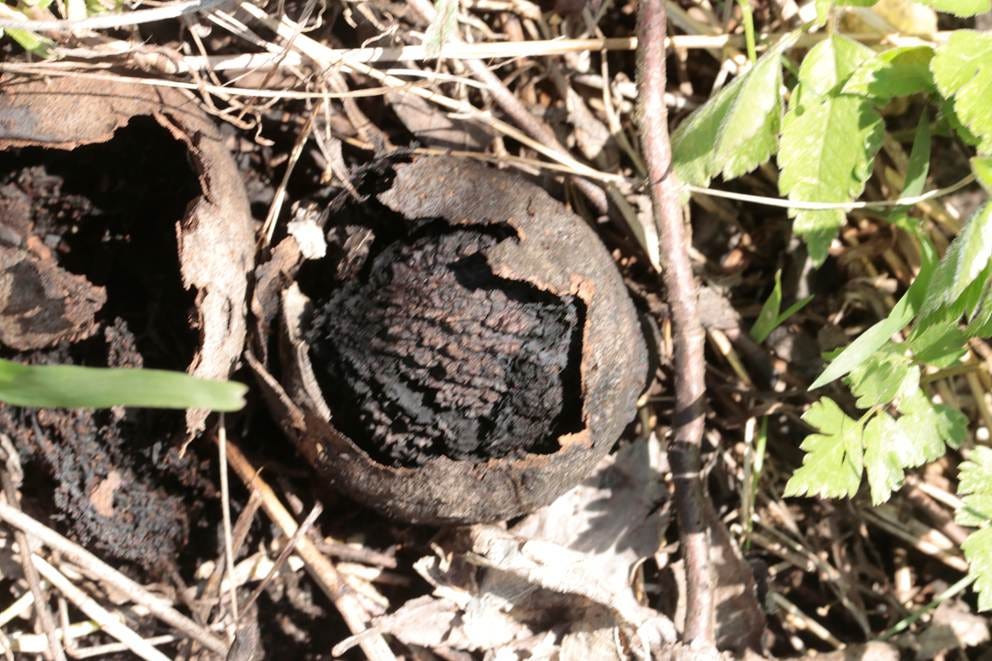
I barely remember busting the impenetrable shells with a hammer or tediously picking the meats out, but I do remember fresh, warm brownies with walnuts from our own tree, served with a glass of milk and an aroma of patience and sweat equity.
The entry for black walnut, Juglans nigra L. (the “L.” indicates that Europe’s great classifier of living things, Karl Linne [Latinized as Carolus Linnaeus], had given the species its name and placed it in his taxonomic scheme), in George Petrides’s volume in the renowned Peterson field guide series reads as follows, in the telescoped style of a field guide (italics and boldface appear in the original):
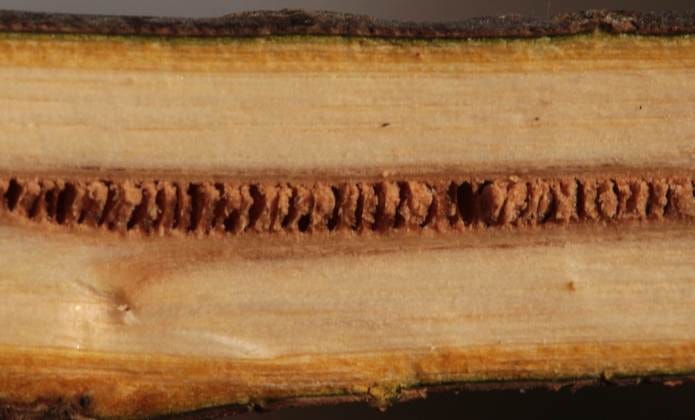
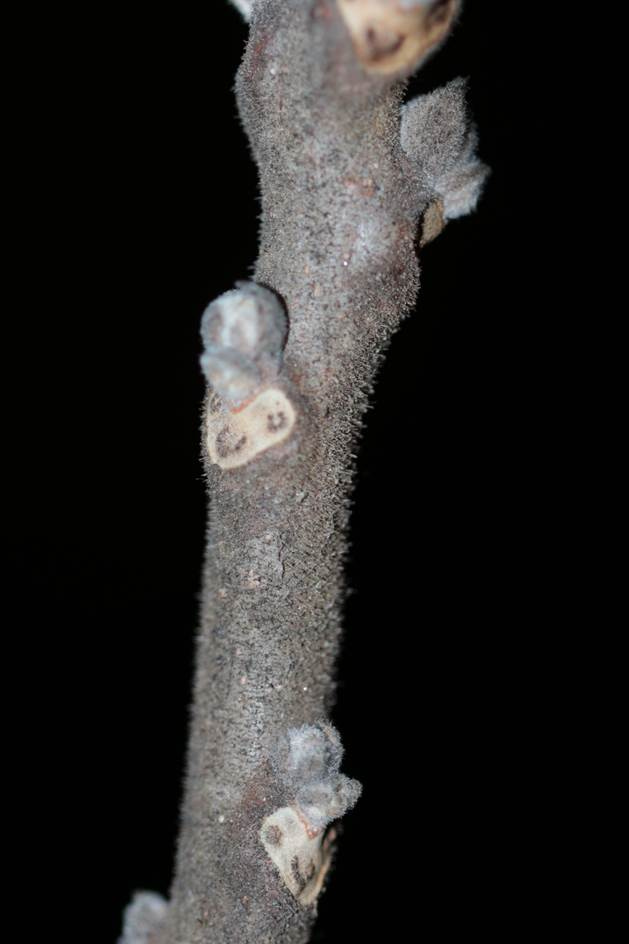
“Recognition: A tall tree whose large leaves have 7-17 narrow, toothed leaflets slightly hairy beneath. Often end leaflet is lacking. Crushed leaves are spicy-scented. Twigs hairless, stout, pith light brown and chambered by woody partitions (pith of branchlets usually better developed than that of twigs). Buds whitish woolly; leaf scars large, without hairy fringe; bundle scars in 3 groups. True end buds present. Bark dark and deeply grooved; ridges not shiny. Leaves 12”-24”. Height 70’-100’ (150’); diameter 2’-4’ (6’). Flowers catkins, April-June. Fruits large spherical nuts with husks of 1 piece, Oct.-Nov.”
For those of us who rely on field guides, our comprehension of plants and animals often is constrained by whatever information appears in the entry for a particular species. Petrides tended to include too much information for a field guide, and at the same time, not enough (true of all guides), but I devoured it as I might the delectable nut meats, and found other guides to trees wanting because they seemed more concerned with time efficiency than with a personal grasp of the living thing described.
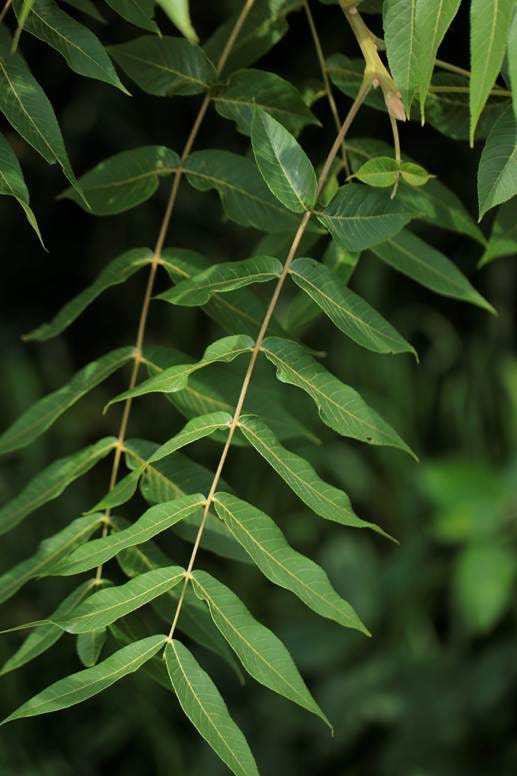
Petrides’s entry continues:
Similar species: Black Walnut and Butternut only plants with compound leaves that have chambered piths. Butternut has hairy ridge above leaf scar, darker pith, end leaflet present, bark shiny-ridged.
Remarks: One of the most valuable and beautiful native trees. Heavy, strong, durable heartwood easily worked, in great demand for veneers, cabinetmaking, interior finishing, and gunstocks. Bark is used in tanning; yellow-brown dye can be made from nut husks. Nuts eaten by humans, squirrels, and mice; twigs by deer. Large trees have been almost exterminated in some regions. The bruised nut husks were used to kill fish for food but this is now illegal. Tomatoes, apples, and other species may not survive near large walnut trees.
I often came away from reading one of these entries feeling overwhelmed, and yet very satisfied with the tantalizing clues to further discovery that had been dropped. I learned many of these field marks by scrutiny of living trees.
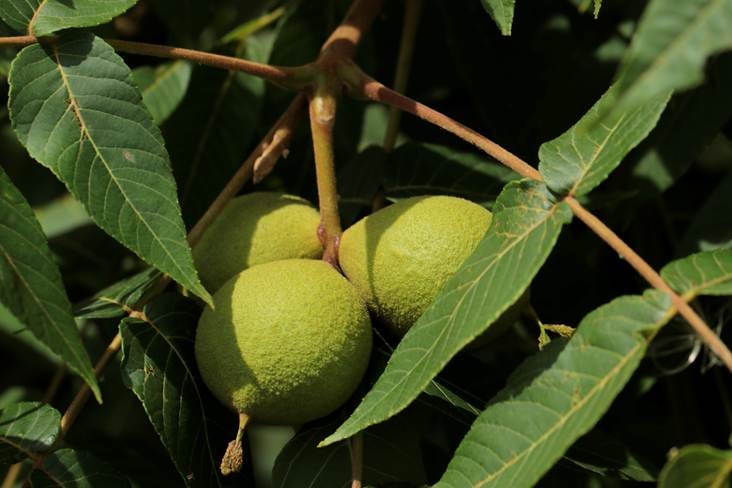
I was not content to see the cursory identifying features of compound leaves, furrowed bark, nuts, and overall growth pattern. With a knife I sliced a twig lengthwise (and more than once) to see the unusual “chambered” pith with its tiny brown dividers a few millimeters apart, in an otherwise hollow stem. Upon splitting a log down the center, I saw that the chambers remained intact. Sometimes I ran the point of a knife or twig down the pith chamber to flatten the dividers, if only because this act seemed so inviting. Reaching up, I would pull a branch down to check for the triangular scars of last year’s leaves, triangles with swollen, rounded corners, each leaf scar with its three “bundle scars” through which the now-absent leaf had received and sent nutrients in its economy of exchange with the rest of the tree and the soil below. I counted leaflets to find exceptions to the “7-17” characteristic, but never did. Starting at the “true” end bud (meaning that the bud, not the twig is the actual terminus of the twig, not true of all trees), I counted back a few years on the branch by locating the annual scars that encircled the twig and marked each season’s new growth.
In some outdoor crafts book I first read about the uses of walnut sap from the green husks and leaves for a dye. Of course, the indelible stain was familiar already from moving these potential missiles out of the path of the lawn mower, or from using the early windfalls as grenades in boyhood war games. An attached stem added to the realism of pulling the pin and starting the ten-count.
Recently I watched a video about a Navajo family in Arizona in which one of the men climbed a tree to collect the fronds—the compound leaves make this a suitable word—of a related Southwestern species for dying wool from the family’s sheep. The wool had been carded and spun, and once dyed it would be threaded on the woolen warp of a hand loom into a rug, along with other colors to make images of the Navajo sacred mountains, the Yei-bi-chei or Holy Ones, and other themes. At a living history museum, I witnessed reenactments of nineteenth-century rural dying, including women in period dress and gender role likewise dying wool with the growing parts of walnuts.
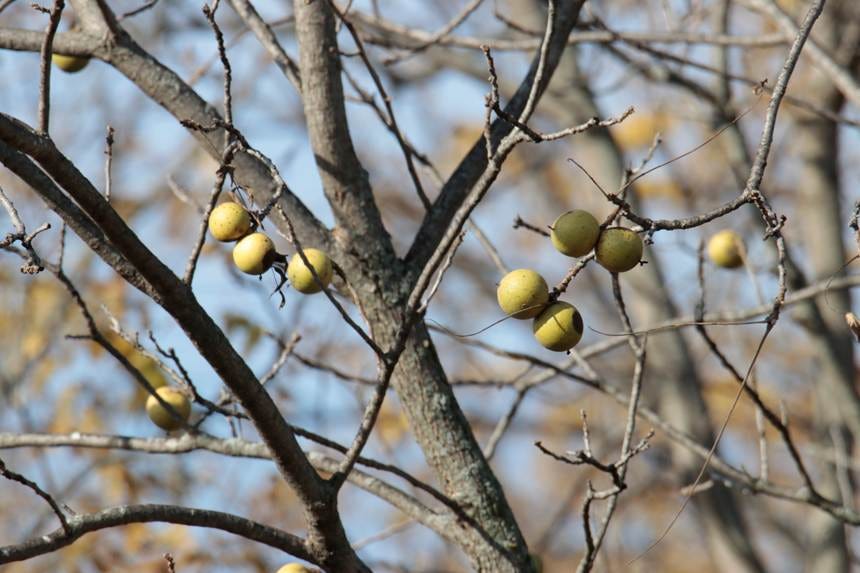
At a craft show several hand-made decorative items of wood caught my eye at one booth. The maker had carefully band-sawn walnut shells transversely and longitudinally to exploit the intriguing internal shapes and symmetries of the lighter-toned, dense, grainless wood that housed the nut meat. These he had painstakingly sanded and varnished, then glued into myriad patterns that not only gave his work a comfortable, natural quality but also formed the very structural integrity of the work. Unlike so many items at craft shows, this man had assiduously avoided overstatement in his use of the shells. The lampstands, shelves, and other items were entirely desirable preservations of the details of a large tree.
At that time, I had not seen walnut shells used in such a way as to seamlessly fuse form with function. The precision of the designs brought to mind the masonry of the stone walls at the old Inca fortress of Sacsahuaman, or the graceful lines of a carpenter’s smoothing plane, its wooden handles darkened with age and sweat.
During the 1980s I set out to carve a set of wooden spoons from the native woods of Iowa, a project I did not complete. Probably ten or twelve spoons were finished, and one or two of these were not strictly “native,” including the inaugural spoon, trimmed and hollowed from the balsa-like wood of a giant northern white cedar. By “native” I mean to include catalpa (I had trouble locating a blank, so this remained on my list to do) and osage-orange (both species were introduced from further south, for functional or landscaping purposes). I found what I considered to be the perfect osage-orange blank in an old fencepost that was barely large enough once the patina of darkened, weathered wood had been shaved away. The post, along with several other osage-orange and red cedar posts, came from an old, overgrown barnyard and pasture in central Iowa during an effort to clear out old fencelines and thorny honeylocusts for pasture cattle. Carving this spoon changed the callouses on my right hand back to blisters, as did a spoon made from ironwood.
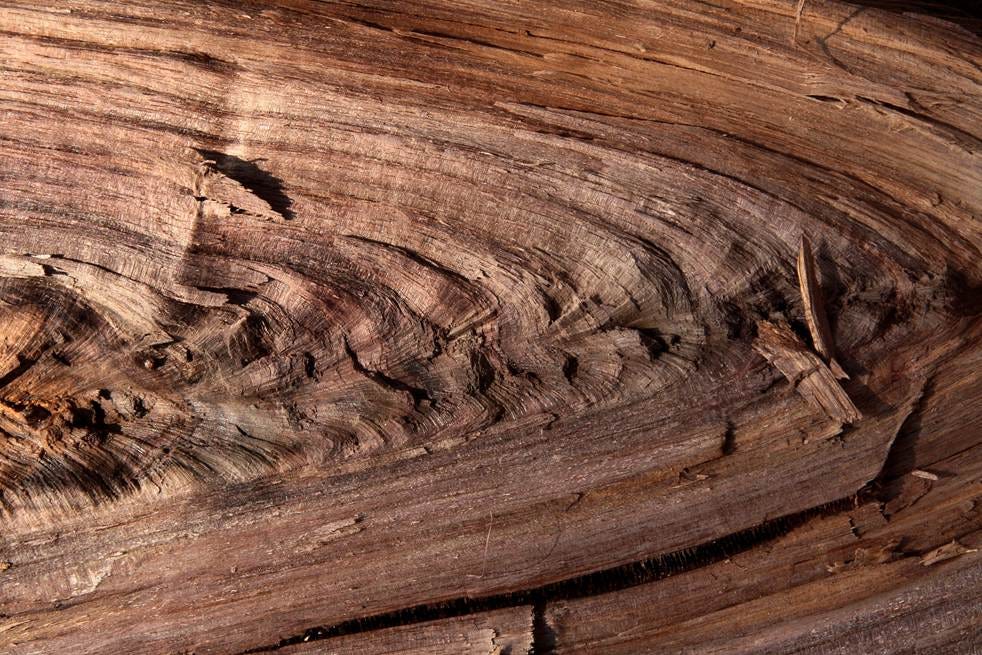
One spoon took form from a blank of walnut heartwood. Its rich, purple-brown color gave off almost no aroma because it had aged for several years. Carving it took some care because the spring grain tended to split away from the prior year’s summer wood and travel into the blank. When the spoon was finished (and it took shape almost as easily as basswood or some other medium-soft wood) and given a couple of coats of tung oil, it shone in full sunlight with a spectacular luster that left one in a quandary: was this wood a deep brown, or was it violet? It could be appreciated only for what it was, an unnamed color that offered rich sensory pleasure.
Part 2 follows soon.
Leland M. Searles, May 2004 and September 21, 2025
Grimes and Grinnell, Iowa